

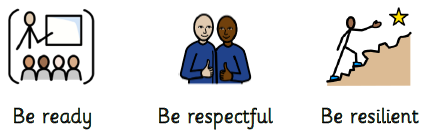
At Woodlands Academy, our values underpin everything we do – how we relate to each other, how we learn and how we behave. Our values are: ready, respectful and resilient.
We promote the highest standards of behaviour and conduct, in an environment where all members of our community are valued as individuals.
Children are expected to be polite and to show respect for other people and property. They are expected to behave in ways which keep themselves and others safe at all times. In class, we expect children to join in with the learning to the best of their ability by listening carefully, answering and asking questions and by taking part fully in activities, taking personal responsibility for their learning.
At Woodlands Academy, we are committed to helping children to be successful – at school, at home and in the community. Teaching children the skills they need to be successful, as well as strategies they need when they are finding it hard to be successful is an integral part of what we do.
We help children to be Woodlands Citizens by modelling, talking about and supporting them to embody our values. Children earn house points for demonstrating our values in and around our community.
We teach children to be the best learner they can be by helping them to understand the characteristics they need to be an effective learner. We do this by using our gem powers:
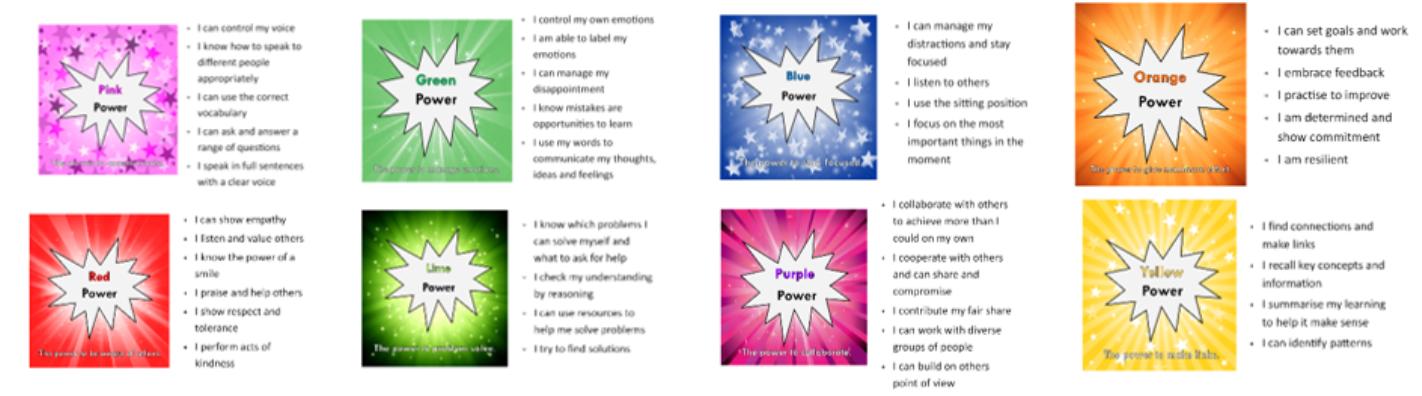
What does success look like?
We value the importance of providing rigid consistency in the response and experience of most of our learners. Having a clear system and shared script that is used by all adults in our Academy, ensures our rigid, consistent response to children who are finding it hard to be successful.
We have stages of support which we use when children are finding it hard to be successful. They are:
Occasionally there may be children who have individual plans to support children to make positive behaviour choices. These children may be communicating a need that needs an individualised approach to help them to be successful and so in these cases the children’s individual plans take precedent over this policy.
Parents and Carers are informed when a child has needed Stage 3 or Stage 4 support to be successful. We use an online monitoring system to record all Stage 3 and Stage 4 behaviours.
Each week, all classes work towards earning Star Time on a Friday afternoon. They do this by earning star powers to fill their class pot, for demonstrating their star powers (learning behaviours).
In our Friday Celebration Assembly, we celebrate children’s achievement through:
Children can achieve golden tickets in class for effort, engagement and success. When a child earns a golden ticket, their name is added to the class jar and at the end of the week one name is selected to choose a lucky dip prize.
Serious incidents are incidents where behaviour choices pose a significant risk to safety, wellbeing, or the learning environment. We consider the follow to be serious incidents:
Our Academy is committed to providing a safe, respectful and nurturing environment in which all children can learn and thrive. Serious incidents are managed promptly, fairly and consistently to ensure the wellbeing of children, staff and our wider community.
We have robust process for managing serious incidents:
At Woodlands we use an emotion coaching approach to support children who are experiencing strong emotions. We believe this is an effective strategy in promoting emotional development in children. When we use an emotion coaching approach we:
We believe emotion coaching gives children positive life affirming messages. These are:
As the adults with responsibility for the children in our care, we need to feel empathy with them, even at times when they are most likely to have lost control; it is this that enables co- regulation.
To ensure that we are able to effectively emotion coach with children, all adults at Woodlands will endeavour to build trusting, respectful relationships with children. This is best exemplified by the phrase ‘connection before correction’.
We are committed to providing a caring, friendly and safe environment for all of our children. We recognise that children, or groups of children, can sometimes harm other children, or groups of children, through abusive or harmful behaviour. This may include physical violence, bullying, sexual harassment, or emotional abuse, whether in person or online.
We will never dismiss such behaviour as “banter” or “part of growing up.” All allegations of child-on-child harm will be taken seriously, investigated promptly, and addressed in line with our safeguarding procedures. Both the child who has been harmed and the child who has caused harm will receive appropriate support, with a focus on education, safety, and wellbeing.
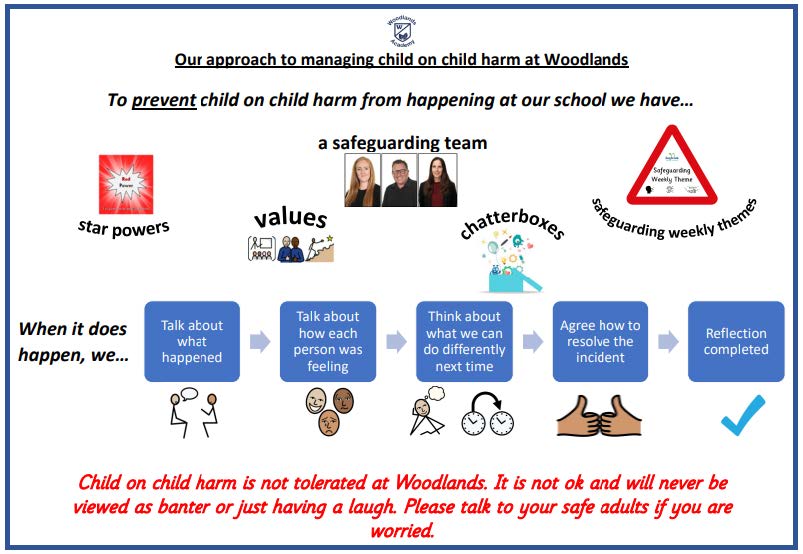
Our approach to preventing and managing child on child harm prioritises prevention, early intervention, and restorative practices to ensure that every child feels safe and valued:
Bullying is repeated, intentional behaviour that hurts, harms or frightens another person, where there is an imbalance of power between the individual involved. Bullying of any kind is unacceptable and will not be tolerated at our Academy. If bullying does occur, all pupils should be able to tell and know that incidents will be dealt with promptly and effectively. We are a TELLING school. This means that anyone who knows that bullying is happening is expected to tell an adult. All bullying allegations will be investigated following our process for managing serious incidents.